
|
|

Helpful Hints |
 |
Learn how to care for your wood, leather, and upholstered furniture. Discover how to identify natural wood and leather products. Prolong the beauty and life of your furniture with the tips found in this section.

|
Leather...there is no other material that matches the feel and aroma of genuine leather. It is the strongest upholstery material known to man. Nature has created its strong physical structure that can stand up to the rigors of daily life in the home and office with minimal care. |
|
The softness of leather available today is far superior to products of just a few years ago due to the modern technology of tanning and dyeing hides. All leather is not the same. It comes from different kinds of hides, is tanned and treated differently and is finished in a variety of ways. Here are some tips when buying leather upholstery First, know what you are getting. Genuine cowhide is the only way to go. The tanning process begins by curing the hides. They are then soaked, cleaned and sorted. The top surface of the hide is then separated from the lower layers. This top portion is referred to as the "top grain". It is the strongest and most supple layer. The layers underneath are referred to as "splits". After the splitting process the hides are dyed in large vats all the way through. Hides with very few natural markings are simply dried and tumbled for softness. These are "pure aniline" hides--the most expensive. This kind of hide is gorgeous but not suitable for a lot of wear and tear. Semi-aniline hides go through the same dyeing process. However, because they may have more natural marks the surface is buffed slightly, then sprayed with pigment and the grain is embossed back onto the skin. It evens out the color and adds a protective coating...this is an ideal leather for active families. A split is the layer of hides under the top grain. It goes through the dye process just like top grain. A heavier pigment is then sprayed on the surface and the grain is embossed onto it. When finished, it looks like top grain but is not as soft or stretchy. Splits are almost always only used on the outside backs of upholstery because it doesn't’t have to stretch. It is perfectly acceptable and brings the price down. Just make sure your leather upholstery has top grain cowhide on the seat and back cushions and the top of the arms. |
|

|
Buying upholstery is much more than buying a piece of furniture to sit on. It is an emotional purchase that sets the tone for your home--a purchase with which you will be extremely happy or one that will be a daily reminder of an unwise choice. |
|
When buying a sofa you must determine what sort of upholstery will fit your lifestyle. What type of room will the furniture be in? What styles of furniture are already in the room? What type of look are you hoping to achieve (i.e., formal and reserved, light and airy, casual and comfortable)? Once you find the style you like and what size will fit your space, how do you know that you’re buying good quality? Here are a few facts that can be helpful. FRAMESMost furniture frames are made from a combination of hardwood and plywood. Plywood is used in the less critical areas which are not stressed very much in use. Hardwood is used in the more critical areas such as the front and side rails. Well-made frames are generally held together with a combination of screws, dowels, corner braces and glue. Grab an arm of a sofa or chair and wiggle it. There should not be any movement or squeaky noises from the frame. SPRINGSSinuous wire springs--zigzags of wire--are the most common type used in furniture construction today. They provide appropriate support and reliable durability in a sturdy frame. Most Italian leather frames are supported by pirelli webbing a crisscross of material similar to the seat belt in your car--which is strong and durable. There is also hand-tied springing in which each coil spring is tied into place with twine. This is more expensive and a slight advantage in comfort and durability over sinuous wire springs. CUSHIONSMost upholstered furniture seat cushions are made of polyurethane foam. The density of the foam affects the comfort and durability of the cushions. Seat cushioning foams that have a density of 1.8 pounds per cubic foot or higher offer the best support and durability. Backs and arms may have a less dense foam as they don’t have to bear as much weight. FABRICChoosing a fabric is the fun part of your upholstery purchase. Obviously it must be pleasing to your eye and fit your decorating needs. You should also consider durability. A rarely used living room can be suitable for light and more delicate fabrics. A family room may require a heavy-duty texture, velvet or chenille. Kids and a dog?...A Weardated® fabric (guaranteed for durability) would be a good choice. The most important thing one can do when shopping for upholstery is to sit in it! Sit in it the way you will at home. After all, you will be living with this piece and probably spending many hours on it. At Rose you can be assured that the guts frame, spring, and cushions--are good quality. Our wide selection of styles and fabrics gives you many choices to fit your needs and tickle your fancy. |
|
|
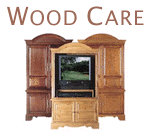
Properly cared for, wood furniture can provide years of beauty to your home or office. This section contains some tips and ideas to prolong the quality of your wood furniture. |
Minor Damage SpillsWood Furniture which is kept in the appropriate environment and is not abused can last a lifetime. To maintain the optimum depth of color, elegance and freshness of your furniture, remove dust regularly and clean the surface with superior products, and learn to use them properly. To enhance the appearance of your furniture, use polishes that bring out its natural beauty, shine and depth of finish. Paste wax can cloak some signs of wear and marginal deficiencies in the finish. It will provide protection from spills and wear. Don't use soap and water to clean furniture, it is not good for the finish. There need be no concern about furniture polish build-up, if it is used properly. Good furniture polish contains cleaners which will remove the previous layer of polish and the dirt which accumulated between applications. Dust consists of tiny particles, silica, fiber, and soil which can number in the thousands and damage the finish if they are not removed properly. Using a cloth that has been moistened with polish will reduce the chance of scratching by silica and soil, which have sharp surfaces. The polish will pick up most of the dust so that it is not simply moved from one piece to another in the air. Body oils can weaken the finish to a point where it will wear off. Areas which are handled, arm rests, headboards, etc. are the most vulnerable to this kind of damage and should be protected with polish often to retard the process. Any film from cooking, heating, smoking, fingerprints, etc. which accumulate on furniture must be removed. Dry, hard surfaces accumulate less of these blemishes, so it is best to clean with wax polishes and avoid those which leave a residue of oil to entrap dirt and dust. The hard surface that is produced by wax is easier to wipe clean. Abrasion will almost certainly damage the finish of furniture. Sliding accessories across dust will in time, cause abrasion, as will dusting with a dry cloth. One should lift vases, lamps, and statuettes, rather than slide them. Avoid placing dirty articles on furniture. At any Rose Furniture location you can pick-up our wood care kit which includes: polish, oil, cleaner and three different bottles of wood tone touch-up.Environmental ConsiderationsLongtime exposure to sunlight can cause fading, bleaching and hairline cracking. Fading and bleaching can be particularly damaging when articles, such as centerpieces or lamps, are left in one place for extended periods, leaving an outline in their wake. Hot cups, pots, flames, etc. can leave rings and damage the finish, as can liquids, if not removed immediately. Even water can leave a permanent scar on furniture. It is best to avoid heat and liquid damage by placing plates or coasters under cups, pots and plants, but when spills occur, blot gently, do not rub. Furniture should be situated out of the sun's direct rays and accessories should be moved periodically. Shades, blinds, tinted glass all help to reduce exposure to direct sunlight. Widely fluctuating changes in temperature or humidity can cause wood to shrink and expand, resulting in blistering finishes, warping, cracking, swelling, and lamination separation. Do not put furniture in the direct path of heating or air conditioning vents, keep in areas where the temperature is controllable. Use humidifiers and dehumidifiers to maintain thirty to sixty percent moisture in the air and temperature should stay between sixty and eighty degrees to reduce the risk of environmental damage. |
|
Industry Links |
|
 | |
Simmons Company | |
 | |
Thornwood | |
